Speed Testing for Athletes: Why We Measure More Than Just Sprint Times
Strength is one thing. Measuring it accurately is another. Learn how force frame testing helps identify hidden deficits, track rehabilitation progress, and guide smarter return-to-sport decisions through objective data.
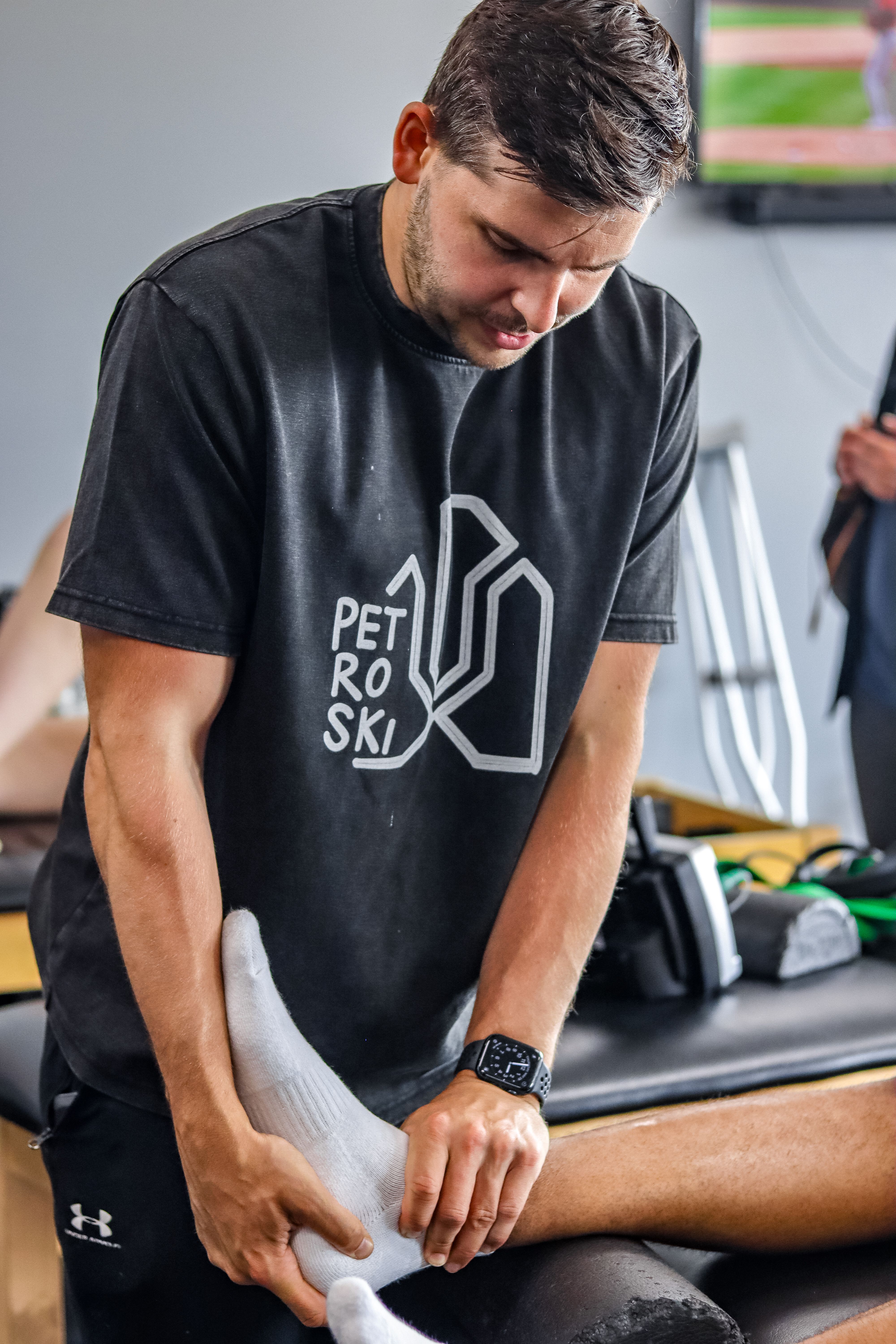
Sean Kelly, Strength and Conditioning Coach
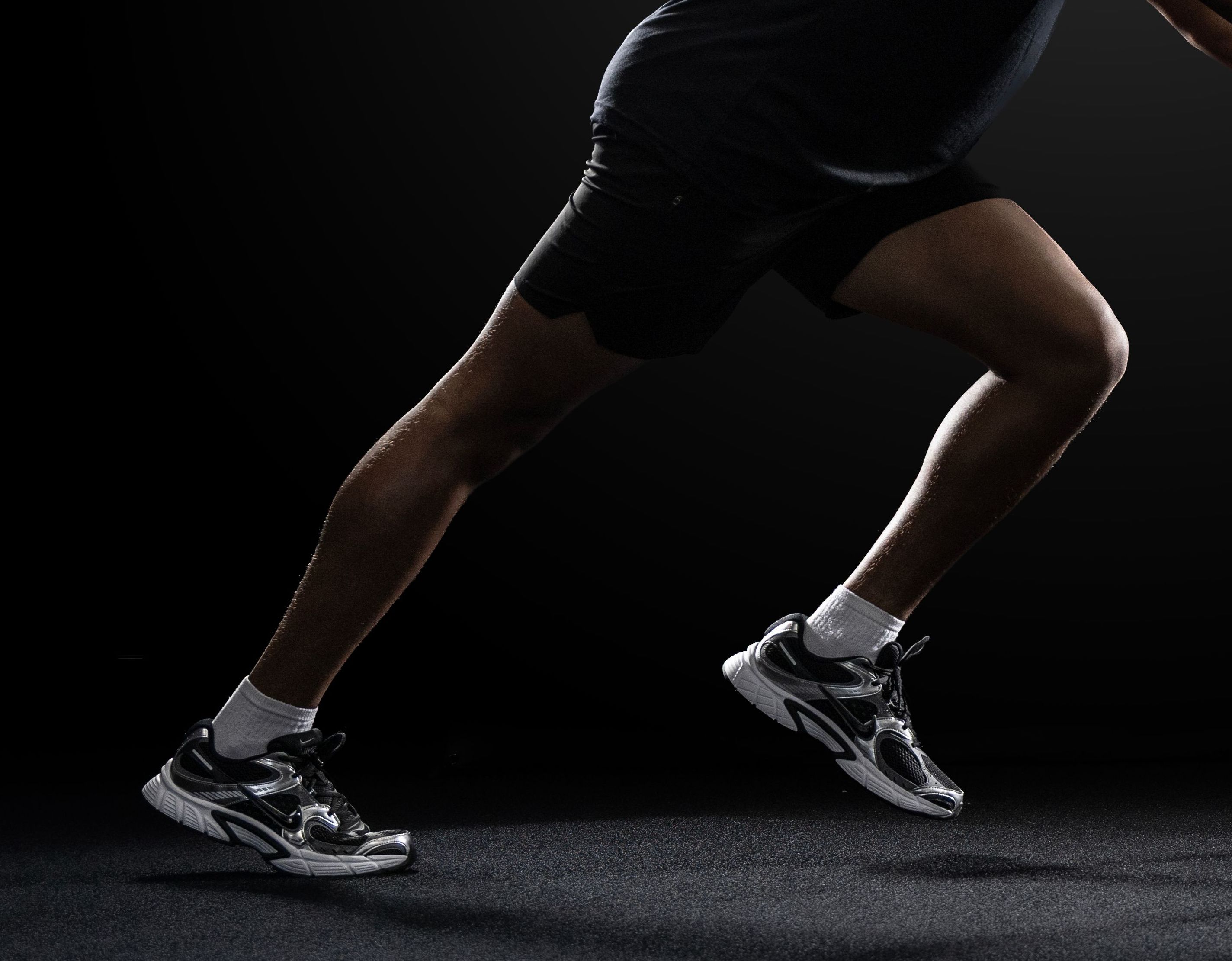
When athletes think about speed, they usually think about one thing: running fast.
But true athletic speed is much more complex than a stopwatch and a straightaway sprint.
In nearly every sport, athletes are constantly accelerating, decelerating, changing direction, reacting to opponents, and reaching high speeds under pressure. To improve those qualities, you first need to understand them.
That’s why we use VALD SmartSpeed timing gates at Petroski Physio.
Rather than relying on observation alone, SmartSpeed allows us to objectively measure how an athlete moves. The data helps us identify strengths, uncover weaknesses, and track progress over time. More importantly, it helps us build training programs based on facts instead of assumptions.
While SmartSpeed can be used for a wide variety of assessments, three tests serve as the foundation of our speed testing system: the 10-Yard Sprint, the 5-10-5 Pro Agility Test, and the 20-Yard Build-Up to 10-Yard Fly.
Together, they give us a complete picture of an athlete’s acceleration, change-of-direction ability, and top-end speed.
The 10-Yard Sprint: Measuring Acceleration
In most sports, acceleration matters more than maximum speed.
Think about the moments that change games. A baseball player stealing a base. A soccer player closing down an opponent. A football player exploding off the line. A basketball player creating separation with their first step.
These movements happen within a few yards, not over a full sprint.
The 10-yard sprint isolates an athlete’s ability to accelerate from a stationary position. By measuring only the first 10 yards, we can evaluate how efficiently an athlete produces force and gains speed.
Strong acceleration is often a reflection of lower-body power, force production, and sprint mechanics. Improvements in this test typically translate directly to better sport performance because athletes become more explosive during the movements that happen most frequently in competition.
The 5-10-5 Pro Agility Test: Measuring Change of Direction
Being fast in a straight line is valuable, but sports are rarely played in straight lines.
Athletes are constantly stopping, cutting, reacting, and accelerating in new directions. The ability to control your body while changing direction can be just as important as pure sprint speed.
The 5-10-5 Pro Agility Test is one of the most widely used assessments for evaluating this quality.
Athletes sprint five yards in one direction, quickly reverse course, sprint ten yards in the opposite direction, then change direction once more to finish through the start line.
While the test sounds simple, it provides valuable information about an athlete’s movement capabilities.
We can evaluate:
Deceleration ability
Reacceleration ability
Lateral movement efficiency
Overall change-of-direction performance
Athletes who perform well in this test often demonstrate better body control, sharper cuts, and greater confidence when reacting to game situations.
For many field and court sport athletes, improving change-of-direction ability can create just as much performance improvement as getting faster in a straight line.
The 10-Yard Fly: Measuring Maximum Velocity
Acceleration and top speed are related, but they are not the same thing.
Some athletes are incredibly explosive over short distances but struggle to reach high maximum speeds. Others possess elite top-end speed but take longer to get there.
To evaluate maximum velocity, we use a 20-yard build-up followed by a timed 10-yard fly zone.
Athletes gradually accelerate through the first 20 yards before entering the timing gates at full speed. The gates then record how quickly they cover the final 10-yard segment.
Because the athlete is already moving at near maximum velocity, the test allows us to evaluate qualities that are difficult to see with the naked eye.
This assessment provides insight into:
Maximum sprinting speed
Sprint mechanics at high velocity
Elasticity and reactive strength
Overall speed potential
For athletes who regularly cover larger distances during competition, improvements in top-end speed can have a significant impact on performance.
Why Objective Testing Matters
One of the biggest mistakes in performance training is relying solely on what something looks like.
An athlete may appear faster, stronger, or more explosive, but objective testing allows us to verify whether those improvements are actually occurring.
SmartSpeed removes the guesswork.
Instead of saying an athlete “looks faster,” we can measure exactly how much faster they have become. Sometimes improvements of only a few hundredths of a second can create meaningful advantages during competition.
The data also helps us individualize training.
An athlete who accelerates well but lacks top-end speed may need a completely different program than an athlete who struggles with change of direction. Testing allows us to identify those differences and focus training where it will have the greatest impact.
Turning Data Into Performance
At Petroski Physio, testing is never about collecting numbers for the sake of collecting numbers.
The goal is to understand how an athlete moves and use that information to make better decisions.
The combination of the 10-yard sprint, 5-10-5 Pro Agility Test, and 10-yard fly gives us a clear picture of the qualities that drive athletic speed. By measuring acceleration, change of direction, and maximum velocity, we can identify opportunities for improvement and track progress throughout training and rehabilitation.
Because when performance is measured accurately, training becomes more targeted, progress becomes easier to track, and athletes gain confidence knowing exactly where they stand.
Rehab, different.
Not a clinic. Not a gym.
A place built for progress.
A team built for performance.
A culture built for you.