Achilles Tendon Ruptures in the NBA: Why They Happen
Achilles tendon ruptures are among the most serious injuries in professional basketball. Learn why they occur, how they affect NBA performance, and what the research says about high-top versus low-top shoes.
Justin Hedges, Performance Intern/ Taylor Bracy, DPT/ Sean Kelley, Strength and Conditioning Coach
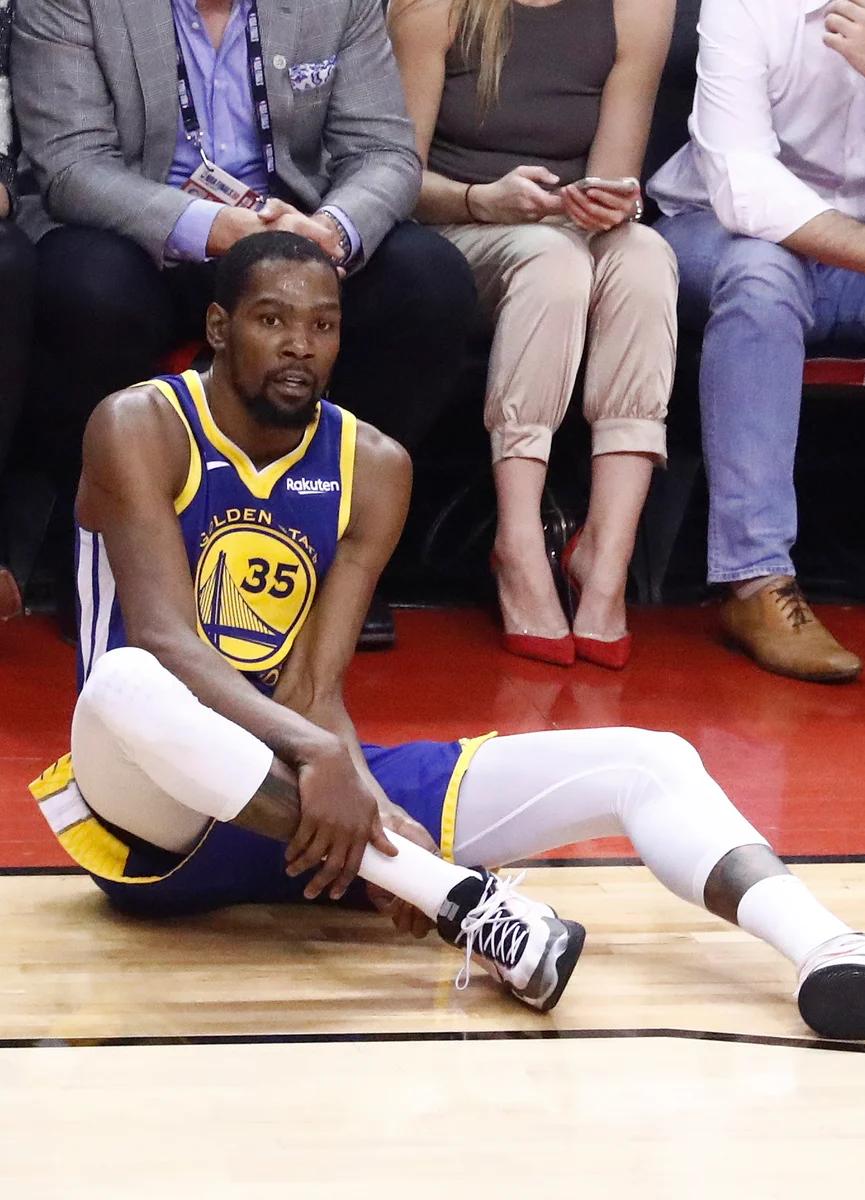
Few injuries in professional basketball create as much concern as an Achilles tendon rupture.
The injury often occurs without contact. A player pushes off, changes direction, or begins accelerating and suddenly reaches toward the back of the ankle. Replays may show little external trauma, but internally the tendon has experienced a complete structural failure.
For an NBA athlete, the consequences extend well beyond missing part of a season. Achilles rupture can affect explosiveness, availability, career length, and the ability to regain previous levels of performance.
That leads to an important question:
Why are NBA players vulnerable to Achilles injuries, and can footwear—particularly high-top versus low-top shoes—meaningfully reduce the risk?
What Does the Achilles Tendon Do?
The Achilles tendon connects the calf musculature to the heel.
It transfers force produced by the gastrocnemius and soleus into the foot, allowing an athlete to:
Accelerate
Sprint
Jump
Land
Decelerate
Change direction
Push off the ground
In basketball, the Achilles tendon repeatedly stores and releases elastic energy.
Each time a player plants, jumps, rebounds, closes out, or explodes toward the basket, the tendon acts like a powerful spring. It must tolerate high forces while transmitting energy between the lower leg and the ground.
The same quality that makes the Achilles so valuable for performance also makes it vulnerable when the applied load exceeds its current capacity.
Why Basketball Places So Much Stress on the Achilles
Basketball combines nearly every movement that loads the Achilles tendon aggressively.
Players repeatedly transition between:
Walking and maximal acceleration
Controlled jogging and explosive sprinting
Landing and immediate takeoff
Forward movement and rapid retreat
Linear running and lateral cutting
Unlike distance running, basketball loading is unpredictable.
The tendon does not experience the same force at the same speed in a repeated rhythm. It must adapt instantly to changing joint angles, movement directions, body positions, and defensive reactions.
An NBA player also performs these actions while carrying greater body mass, producing elite levels of force, and competing through a congested schedule.
The issue is therefore not simply how much force the Achilles experiences.
It is how quickly that force is applied, how often it is repeated, and whether the athlete has enough capacity to tolerate it.
How Do Achilles Ruptures Occur in NBA Players?
Video-based research has examined the positions and playing situations associated with Achilles ruptures in NBA athletes.
One study identified 27 NBA players who sustained Achilles ruptures between 1991 and 2021 and analyzed available game footage to better understand the injury mechanism.
These injuries are commonly noncontact events.
They may occur when the athlete is:
Beginning an acceleration
Pushing forcefully through the forefoot
Transitioning from backward to forward movement
Cutting or changing direction
Landing and attempting to move again
Moving with the ankle in a loaded dorsiflexed position
The rupture may appear sudden, but the underlying risk is usually more complex than one bad step.
The final movement is often simply the moment when the force demand exceeds the tendon’s ability to tolerate the load.
Why the Injury Can Be Career-Changing
Returning to an NBA roster is not the same as returning to preinjury performance.
Research has reported different return-to-play percentages depending on the players studied, the years included, and how return to play was defined.
One study covering NBA Achilles ruptures from the 1996–1997 through 2016–2017 seasons found an 80% return-to-play rate, with an average recovery period of approximately 311 days. The study also reported declines in several performance measures after the injury.
Another analysis found that 72.3% of NBA players returned after Achilles repair. Those who returned experienced reduced game utilization and shorter careers compared with uninjured controls.
A separate study reported that 39% of the players included in its sample never returned to NBA competition after surgical repair. Players who did return demonstrated reductions in playing time and performance.
More recent economic and performance research reported an overall return-to-play rate of approximately 78%, while nearly one-third of returning players were out of the NBA within three years.
These findings do not mean every player will experience the same outcome.
However, they reinforce an important point:
An Achilles rupture is not simply an injury that requires time. It can change how an athlete produces force, tolerates workload, and sustains an NBA career.
Why Performance May Decline After Rupture
Basketball performance depends heavily on the stretch-shortening cycle.
The athlete must rapidly absorb force and then reproduce it during:
Jumping
Rebounding
Sprinting
Cutting
Defensive recovery
Repeated takeoffs
Following Achilles rupture and repair, an athlete may regain enough strength to play but continue to demonstrate limitations in:
Calf strength
Plantar-flexor endurance
Tendon stiffness
Reactive strength
Ankle power
Single-leg propulsion
Repeated jumping capacity
Rate of force development
A player may therefore pass basic strength testing but still lack the elastic and reactive qualities required for NBA competition.
This helps explain why return to participation may occur before full restoration of performance.
Some research suggests that players who successfully continue competing may improve beyond the first postoperative season. However, the recovery timeline and eventual level of performance remain highly variable.
Are High-Top Basketball Shoes Safer for the Achilles?
The Otter discussion raised an important question:
Do high-top basketball shoes reduce Achilles rupture risk compared with low-top shoes?
Based on the available research, the answer is not clear enough to say yes.
There is limited direct evidence comparing shoe-collar height and actual Achilles rupture rates in basketball players.
Most high-top versus low-top research focuses on:
Ankle sprains
Ankle range of motion
Inversion resistance
Muscle activation
Running and jumping mechanics
These studies can help us understand how shoes affect the ankle, but they do not prove that a specific shoe height prevents Achilles rupture.
What High-Top Shoes May Change
A laboratory study examining Achilles loading found that high-top shoes reduced estimated peak Achilles tendon tension by an average of 9.9% compared with low-top shoes. Tied laces also reduced estimated tendon tension, and tied high-top shoes produced a smaller peak dorsiflexion angle than tied low-top shoes.
At first glance, this sounds like high-tops may protect the Achilles.
However, a laboratory reduction in estimated tendon tension during a controlled task does not automatically equal fewer ruptures during NBA competition.
Real basketball includes:
Unplanned cutting
Fatigue
Contact
Variable surfaces
Different shoe constructions
Repeated high-force actions
Individual movement strategies
Shoe-collar height is only one characteristic of the entire footwear system.
High-Tops and Ankle Sprains
Research on ankle sprain prevention also fails to show a consistent advantage for high-top shoes.
A prospective study of intramural basketball players found no meaningful difference in ankle injury rates between standard high-top and low-top shoes.
A later review concluded that high-top shoes may restrict ankle-sprain mechanics during static testing, but evidence supporting protection during dynamic athletic tasks was weak. High-tops were also associated with altered ankle muscle activation before landing.
Therefore, even for ankle sprains—the injury most commonly associated with shoe height—the evidence is mixed.
It would be inappropriate to assume that a higher collar automatically prevents Achilles rupture.
Could More Ankle Support Have Tradeoffs?
Greater shoe support may restrict certain ankle motions, but restriction is not always the same as protection.
One study found that basketball shoes with increased ankle support reduced ankle eversion range but also increased shock transmission and reduced jumping and running performance.
This highlights an important concept in footwear research:
Changing motion at one joint can redistribute force somewhere else.
A shoe that reduces ankle movement may alter how force is absorbed through the:
Foot
Achilles tendon
Knee
Hip
Trunk
That does not necessarily make the shoe dangerous. It means footwear cannot be evaluated by collar height alone.
Outsole Traction May Matter More Than Collar Height
The interaction between the shoe and court may be especially important during noncontact injuries.
Research has shown that footwear traction influences lower-extremity joint loading.
Another study found a relationship between greater rotational traction and higher rates of noncontact lower-extremity injury. The authors recommended selecting footwear with the lowest rotational traction that does not meaningfully reduce performance.
In practical terms, a shoe that grips the court aggressively may help an athlete accelerate and cut.
However, if the foot remains fixed while the body continues moving, the forces transferred through the ankle and lower extremity may increase.
This does not prove that outsole traction causes Achilles ruptures in NBA players. It does suggest that traction, outsole design, court interaction, and movement strategy may be more meaningful than simply labeling a shoe as high-top or low-top.
Shoe Fit and Lacing Also Matter
The shoe must work as one system.
Factors that may influence foot and ankle mechanics include:
Collar height
Heel counter stiffness
Midsole stiffness
Heel-to-toe drop
Forefoot flexibility
Outsole traction
Shoe mass
Lacing technique
Overall fit
Movement of the foot inside the shoe
Research has shown that lace tightness can change ankle mechanics, perceived pressure, and in-shoe movement.
A poorly fitted high-top may provide less functional control than a properly fitted low-top.
The category of the shoe does not tell us how the athlete’s foot actually behaves inside it.
What Probably Matters More Than High-Top Versus Low-Top
Achilles rupture risk is multifactorial.
No single shoe can correct an athlete who is underprepared for the demands of basketball.
More important considerations may include:
Calf Strength
The calf complex must produce and absorb large plantar-flexion forces.
Testing should examine both maximal force and the athlete’s ability to repeat force over time.
Soleus Capacity
The soleus is heavily involved when the knee is bent, which occurs constantly during basketball.
Bent-knee plantar-flexion strength and endurance deserve specific attention.
Reactive Strength
The Achilles must tolerate rapid transitions from loading to propulsion.
Hop tests, rebound jumps, drop jumps, and repeated pogo variations can provide useful information about elastic function.
Tendon Exposure
Athletes must be progressively exposed to:
Sprinting
Jumping
Landing
Deceleration
Repeated takeoffs
High-intensity change of direction
Avoiding high tendon loads entirely does not prepare the tendon for competition.
Fatigue Resistance
The athlete must maintain calf and ankle function late in games and during dense portions of the schedule.
A player may tolerate several maximal efforts when fresh but lose force, stiffness, or coordination as fatigue accumulates.
Workload Progression
Sudden increases in games, practices, sprint volume, or jumping exposure may exceed the athlete’s current capacity.
The goal is not to eliminate load.
The goal is to build enough capacity to tolerate it.
What Should Be Monitored in NBA and Basketball Athletes?
A complete Achilles-focused performance profile may include:
Standing calf-raise force
Seated or bent-knee plantar-flexion force
Single-leg calf-raise endurance
Ankle dorsiflexion range of motion
Isometric plantar-flexion testing
Single-leg jump performance
Hop-test contact time
Reactive Strength Index
Drop-jump performance
Repeated-hop fatigue
Sprint exposure
High-intensity deceleration volume
Left-to-right asymmetry
Athlete-reported tendon stiffness or soreness
No single metric predicts rupture.
The value comes from monitoring how these qualities change over time and how the athlete responds to training and competition.
The Footwear Answer Is Not Simple
The current evidence does not support telling every basketball player to wear high-tops to prevent Achilles rupture.
High-top shoes may reduce ankle dorsiflexion and estimated Achilles tension in certain controlled conditions. However, research has not established that they reduce Achilles rupture rates in NBA players.
Low-top shoes are not automatically unsafe.
High-top shoes are not automatically protective.
Footwear decisions should consider:
Comfort
Fit
Traction
Stability
Athlete preference
Playing style
Previous injury
Court surface
How the athlete moves in the shoe
The best shoe is not necessarily the one with the highest collar.
It is the one that allows the athlete to perform effectively without creating excessive or unfamiliar stress.
Final Thoughts
Achilles tendon rupture remains one of the most significant injuries in professional basketball.
The NBA places extraordinary demands on the tendon through repeated sprinting, cutting, jumping, landing, and rapid changes in direction. When rupture occurs, many players return to competition, but returning to previous availability, explosiveness, and career trajectory is far less certain.
Footwear may influence Achilles loading, ankle motion, traction, and lower-extremity mechanics. However, the available evidence does not show that high-top shoes alone prevent Achilles ruptures.
Achilles protection is not found in one piece of equipment.
It is built through:
Progressive loading
Strong calves and soleus muscles
Regular sprint and jump exposure
Reactive-strength development
Intelligent workload management
Appropriate recovery
Individualized footwear selection
The shoe may influence the system.
But the capacity of the athlete remains the foundation.
Rehab, different.
Not a clinic. Not a gym.
A place built for progress.
A team built for performance.
A culture built for you.