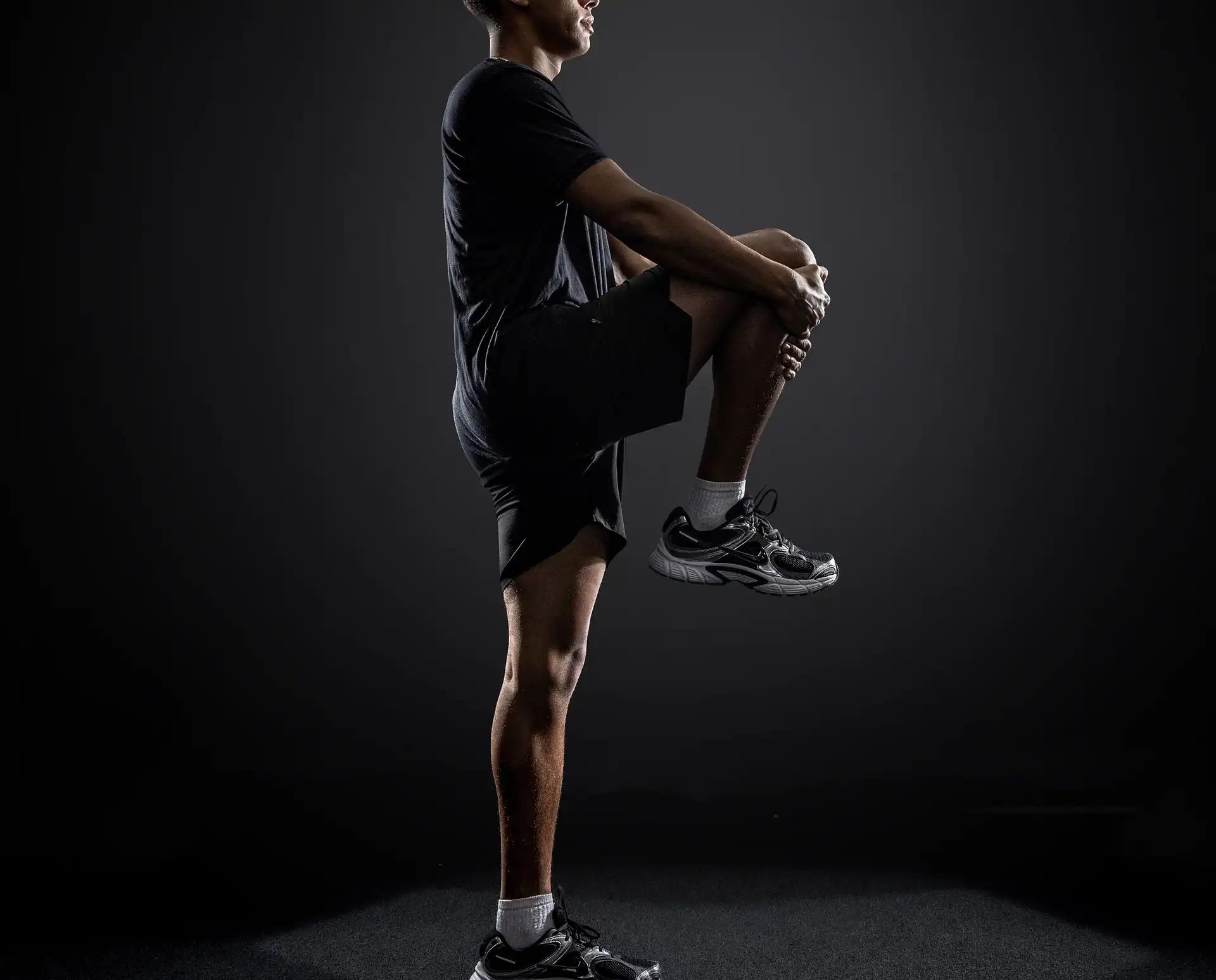
Patellar Tendinopathy: Returning for a Critical Senior Season
A senior high school soccer player overcame debilitating patellar tendon pain during a critical recruitment season through Petroski Physio’s structured, performance-focused treatment approach. By restoring load tolerance, rebuilding strength, and progressing into sport-specific demands, he returned pain-free and ultimately secured a college roster spot.
Nick Petroski
Owner, Petroski Physio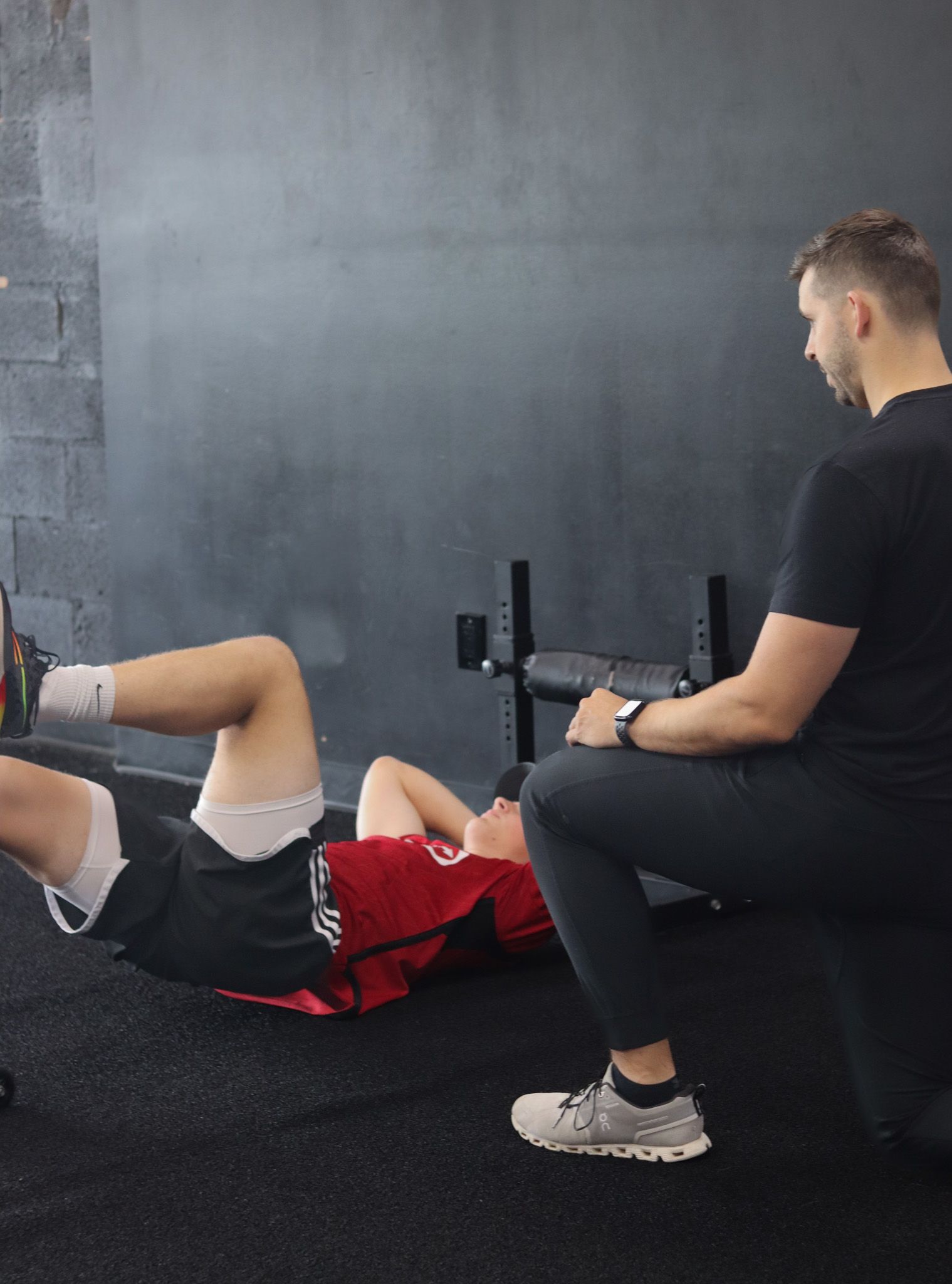
Meet the Athlete
Heading into his senior year, our athlete was preparing for the most pivotal season of his high school soccer career. After months of training with the goal of earning a college roster spot, he was entering the preseason ready to compete, showcase, and finalize his recruitment path. His position demanded sprinting, high-velocity striking, explosive change of direction, and repeatability under fatigue, all heavily dependent on a healthy patellar tendon.

What was the challenge?
Just as preseason intensity increased, he developed sharp, persistent pain in his patellar tendon. Overnight, essential movements became impossible: sprinting, ball striking, and high-speed effort all triggered pain.
He struggled with:
Pain during sprinting and acceleration
Inability to strike or load at full intensity
Reduced tolerance to high-velocity movement patterns
For an athlete fighting for a college opportunity, this wasn’t just physical, it was a threat to everything he had worked for.
What was our process?
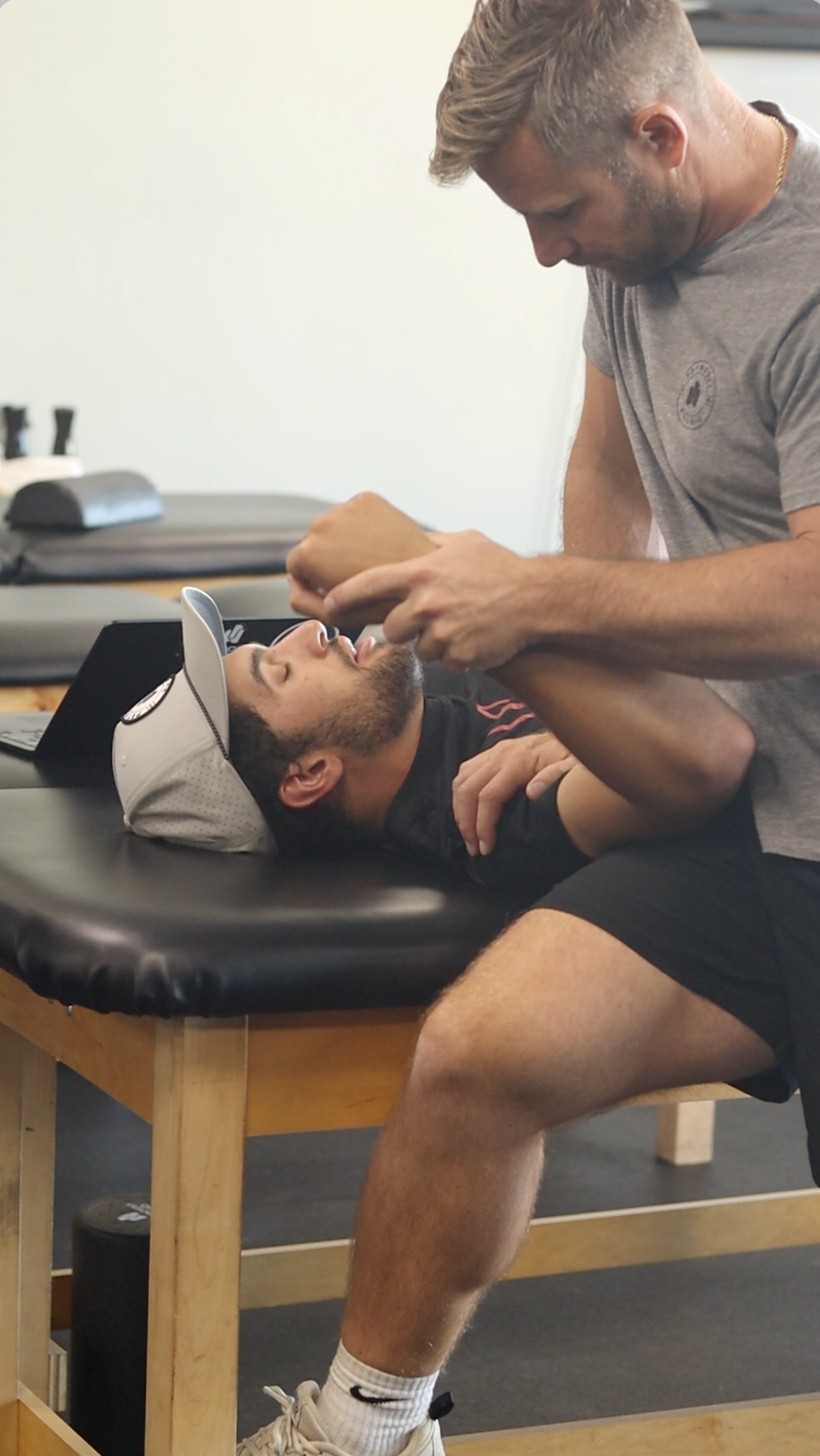
We began with a precise, evidence-based assessment to understand tendon capacity, severity, and load tolerance.
Step 1: Comprehensive Assessment
His evaluation included:
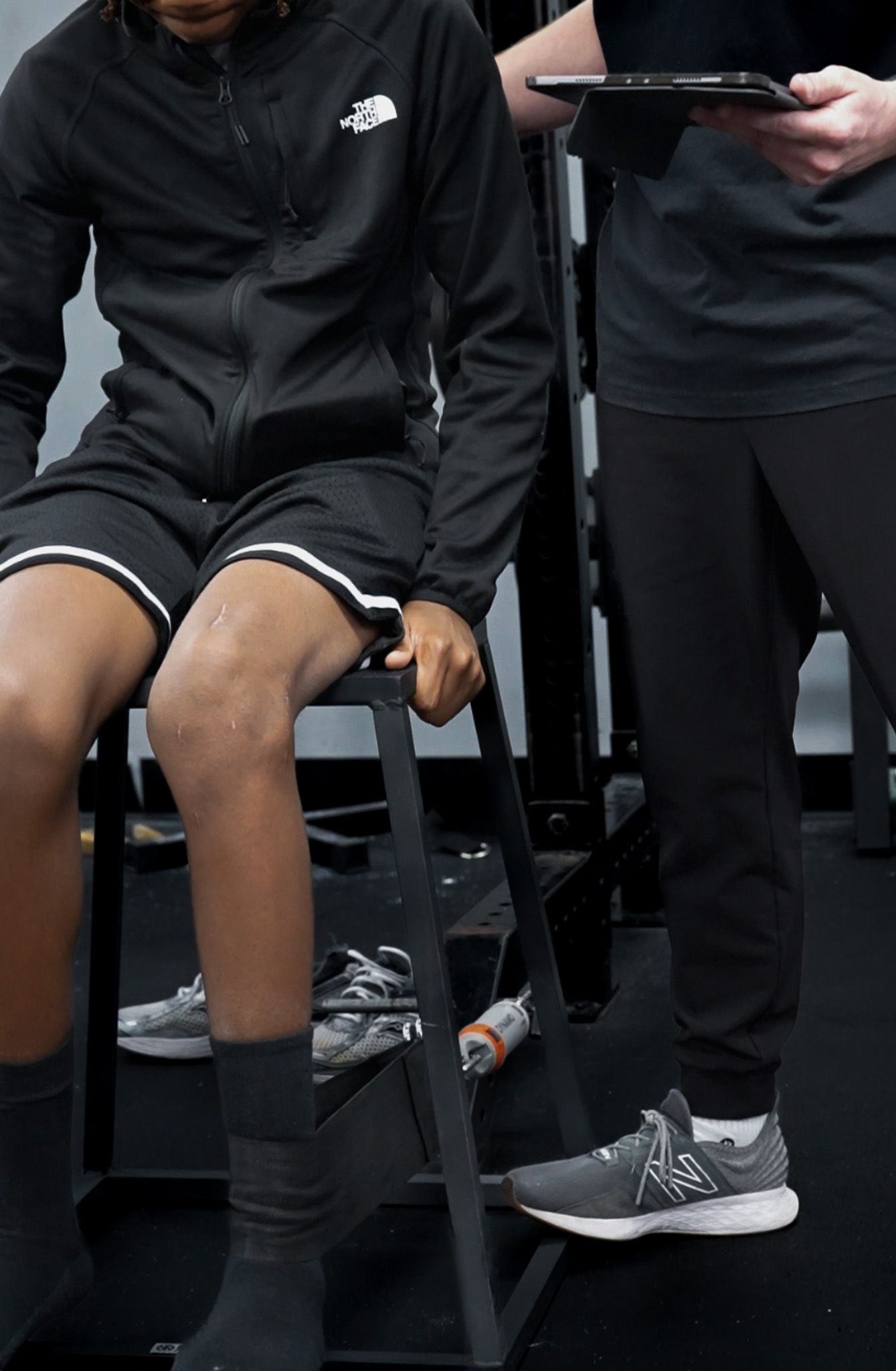
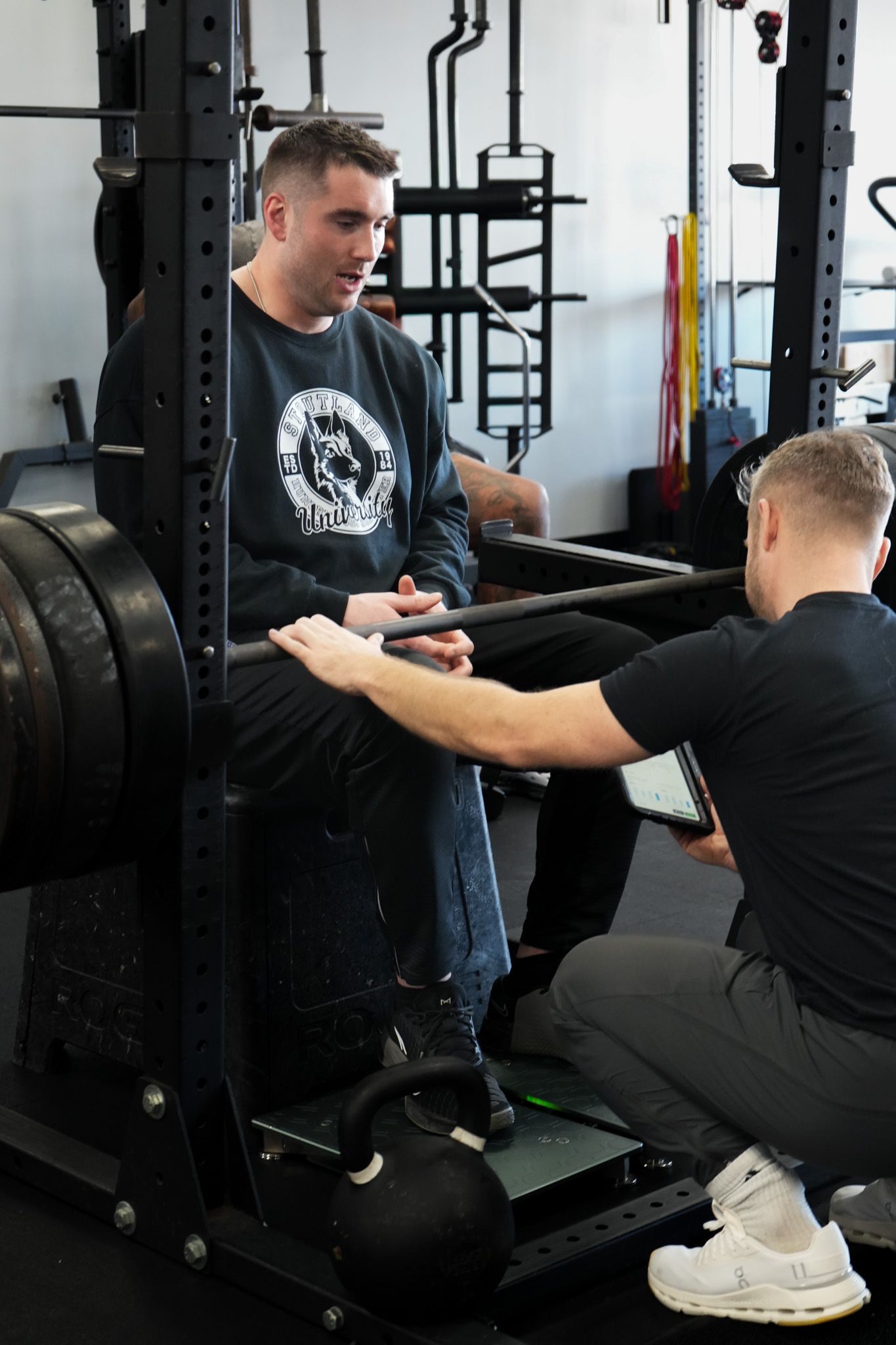
Knee extension dynamometryTo assess quadriceps strength, asymmetry, and load tolerance, markers closely tied to tendon behavior.
Dynamic diagnostic ultrasoundTo evaluate tendon structure, architecture, thickness, and neovascularity.
Force-plate testingTo identify deficits in deceleration, rate of force development, countermovement strategy, and symmetry.
This gave us clarity on severity, symptoms, and performance demands, allowing us to design a precise progression.
Step 2: Early Phase — Restoring Load Tolerance
In the early phase, we focused on:
Pain-modulating isometrics
Mid- to end-range loading in provocative positions
Reducing quadriceps inhibitionPreserving athletic capacity
The goal was to restore tendon tolerance without flare-ups, setting the stage for more intensive loading.
Step 3: Middle Phase — Heavy Slow Resistance Training
Once symptoms stabilized, we advanced into Heavy Slow Resistance (HSR) training, the gold-standard stimulus for tendon remodeling.
This phase included:
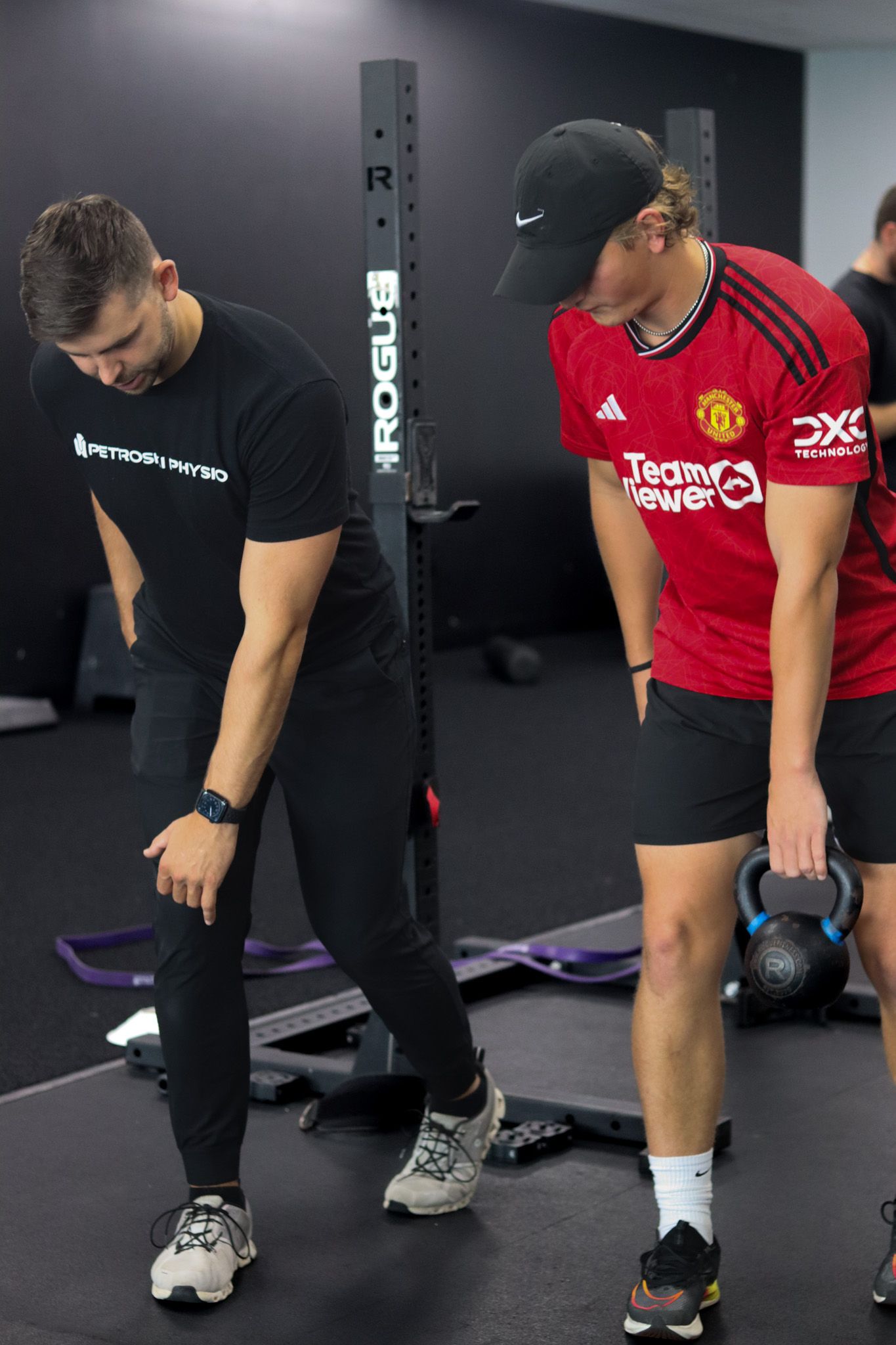
Squat and split-squat variations
Tempo-controlled knee extension strength work
Hip-dominant lifts to support force production
Progressive loading guided by symptoms and objective markers
As capacity improved, we reintroduced:
Running
Controlled cutting
Gradual jumping progressions
Each step was monitored through force-plate metrics, symptom tracking, and ultrasound check-ins.
Step 4: Late Phase — Sport-Specific Loading
The final phase focused on turning strength gains into soccer-ready performance — especially deceleration, elasticity, and high-speed chaos.
Programming included:
High-speed deceleration exposure
Multi-directional plyometrics
Reactive jump tasks
Soccer-specific cutting, sprinting, and shooting patterns
This ensured the tendon was prepared not only for controlled training, but for unpredictable match demands.
Where is he now?
By the end of the process, he achieved:
Full strength symmetry on knee-extension testing
Objective improvements in tendon structure on ultrasound
Restored power output on force plates
Pain-free sprinting, cutting, and ball striking at full intensity
He entered his senior season fully healthy and performed at a level that led to his commitment to Holy Family University. Not only did he return, he became a stronger, more resilient athlete with renewed confidence in his body and future.
We create individualized recovery plans after injuries like ACL tears, shoulder surgeries, and muscle strains to help you safely return to sport and daily life.
We help athletes rebuild strength and movement after common injuries like rotator cuff issues, tendinitis, and ligament sprains so you can perform with confidence again.
We guide you through every phase of recovery — from post-surgery rehab to performance training — so you don’t just return, you come back stronger.
Recovery Stories
Chronic Patellar Tendinopathy: Restoring NBA-Level Knee Capacity
Rebuilding tendon capacity to restore performance from chronic knee pain.
Patellar Tendinopathy: Returning for a Critical Senior Season
Stronger for recruitment after overcoming patellar tendon pain.
Chronic Patellar Tendinopathy: Restoring NBA-Level Knee Capacity
Rebuilding tendon capacity to restore performance from chronic knee pain.
Patellar Tendinopathy: Returning for a Critical Senior Season
Stronger for recruitment after overcoming patellar tendon pain.
Rehab, different.
Not a clinic. Not a gym.
A place built for progress.
A team built for performance.
A culture built for you.