Why Your “Good” Leg Matters Before ACL Surgery
Testing the uninvolved leg before ACL surgery creates a pre-surgery baseline that can provide useful context when evaluating strength and performance later in rehabilitation.

Jared Hermann DPT
Why Do We Test the “Good” Leg Before ACL Surgery?
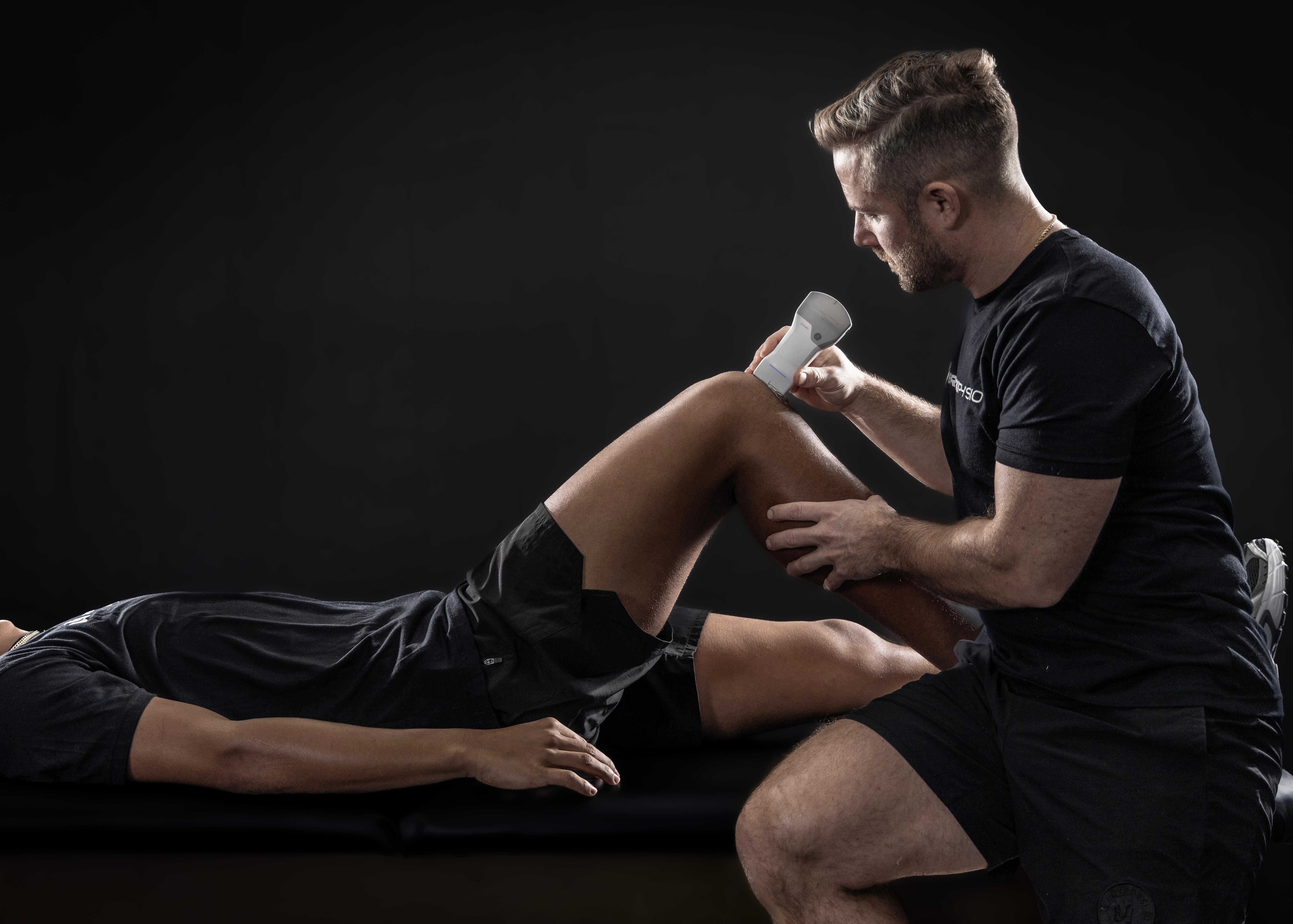
You're preparing for ACL surgery on one knee—so why is your physical therapist testing the other leg?
Because your “good” leg can give us extremely valuable information about where we want the reconstructed knee to eventually return.
We Need a Baseline
Before surgery, we may measure the uninvolved leg's:
Quadriceps strength
Hamstring strength
Single-leg hop distance, when appropriate
Triple-hop distance, when appropriate
Other strength or performance measures
These numbers create a snapshot of your physical capacity before surgery.
Months later, we can compare the reconstructed leg against those original values.
Why Not Just Compare Your Legs Later?
A common method during ACL rehabilitation is the Limb Symmetry Index (LSI).
For example, if your reconstructed leg produces 90% of the performance of your uninvolved leg, you may have a 90% LSI.
But there is a potential problem.
During months of rehabilitation, the “good” leg can also lose strength and athletic capacity.
Imagine your reconstructed leg improves—but your other leg simultaneously gets weaker.
Your legs may look more symmetrical even though you haven't fully returned to your previous level of performance.
A Fixed Target Instead of a Moving Target
One strategy highlighted in ACL rehabilitation research is Estimated Pre-Injury Capacity (EPIC).
Instead of comparing the reconstructed leg only with the other leg at the same postoperative time point, EPIC uses the uninvolved leg's preoperative performance as a fixed benchmark.
That gives us another question to ask later in rehabilitation:
“How close is the reconstructed leg to the level of performance we measured before surgery?”
Why This Is Valuable
Testing before surgery gives your rehabilitation team objective information that may remain useful at:
6 months
9 months
12 months
Return-to-sport testing
ACL rehabilitation is a long process.
The more useful information we collect at the beginning, the better we can understand your progress later.
So when your physical therapist tests your “good” leg before ACL surgery, we're not ignoring the injured knee.
We're establishing a target for where we eventually want that knee to go.
Preparing for ACL surgery? Petroski Physio uses objective strength and performance testing to establish your pre-surgery baseline and help guide your rehabilitation. Contact us to schedule an ACL prehab evaluation.
Rehab, different.
Not a clinic. Not a gym.
A place built for progress.
A team built for performance.
A culture built for you.